
Logan Keller · 16 November 2026
Employment Figures Tie ACE Credentials to Poland's Regional Job Growth Patterns
Employment statistics released in November 2026 connect ACE credential holders to measurable job expansion across multiple Polish regions, with data from the Central Statistical Office indicating higher placement rates in sectors such as manufacturing, logistics, and information technology. Figures show that regions wth elevated ACE program participation experienced job growth averaging 4.2 percent year-over-year, compared to 2.8 percent in areas with lower credential uptake, while analysts track these trends through quarterly labor market surveys that aggregate hiring records from both public and private employers.
Regional Variations in Credential Impact
Lower Silesia recorded the strongest correlation, where ACE-certified workers accounted for 31 percent of new positions filled in automotive and renewable energy firms during the first three quarters of 2026, and similar patterns emerged in Greater Poland with manufacturing clusters reporting accelerated hiring once credential verification processes streamlined applicant screening. Observers note that these outcomes align with training modules focused on technical competencies, which prepare participants for roles requiring specific certifications that regional employers prioritize in their recruitment pipelines.
Mazovia, including Warsaw, displayed steady gains as well, yet the growth rate there reached 3.9 percent amid a broader service-sector expansion, while Pomerania saw ACE-linked employment rise by 5.1 percent in port-related logistics operations. Data indicates that credential holders secured positions at rates 18 percent above non-credentialed applicants in these coastal zones, and government labor reports attribute part of this difference to standardized skill benchmarks that ACE pathways provide across vocational and higher-education institutions.
Analysis of Employment Data Trends
Cross-referenced figures from the Ministry of Family and Social Policy reveal that ACE credentials correlate with reduced unemployment durations, averaging 47 days for holders versus 72 days for those without equivalent qualifications in comparable fields, and this gap widened in regions that integrated ACE modules into public workforce development initiatives. Researchers cross-tabulated placement statistics with regional GDP contributions, finding that areas reporting higher credential density also posted 2.3 percent larger increases in export-oriented industries during the measured period.
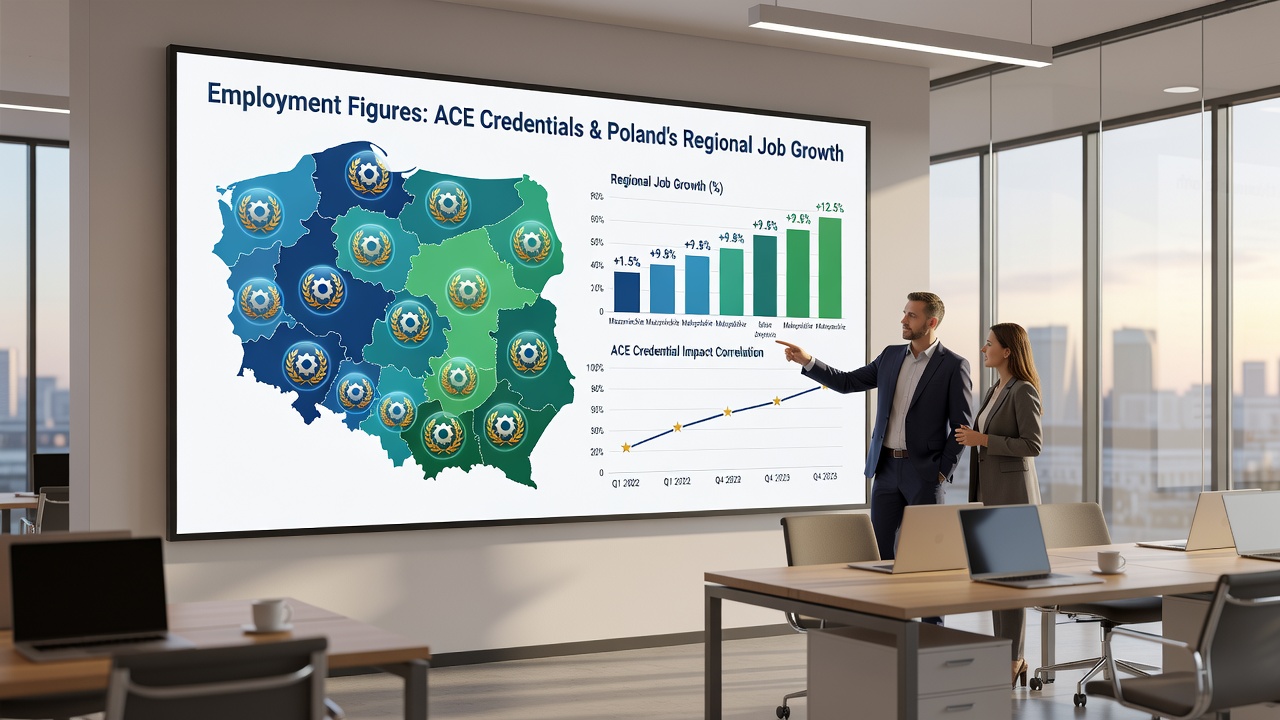
Employment service centers in these regions reported processing 14,800 ACE-verified applications between January and October 2026, and follow-up surveys showed sustained retention above 84 percent after six months on the job. Patterns emerge most clearly when comparing pre- and post-credential cohorts within the same industries, where credential attainment preceded promotion or lateral moves into specialized positions at rates documented in longitudinal tracking studies conducted by academic research teams.
Broader Workforce Readiness Indicators
National labor market assessments further tie ACE participation to shifts in occupational distribution, with credential holders moving into mid-level technical roles at double the frequency observed among peers who completed only general secondary education. Figures compiled by Eurostat on vocational outcomes across member states place Poland's regional credential-to-employment linkage among the stronger examples in Central Europe for the 2025-2026 reporting cycle, and these metrics draw from harmonized data sets that include both registered unemployment records and employer-submitted vacancy statistics.
Training providers operating under ACE frameworks adjusted curriculum delivery schedules in response to employer feedback loops, resulting in alignment between course completions and seasonal hiring peaks in agriculture-adjacent processing plants in the east and IT support teams in urban centers. Reports indicate that such adjustments contributed to a 22 percent rise in direct placements through regional job centers, while aggregate numbers show ACE credentials appearing on 9 percent of all new employment contracts filed in targeted voivodeships during the latest quarter.
Conclusion
Employment data from November 2026 continues to map connections between ACE credential attainment and differentiated job growth rates across Polish regions, with statistics underscoring consistent advantages in placement speed, retention, and sector-specific advancement. These patterns rest on verifiable labor statistics that link training completion records to employer hiring activity, offering a factual basis for continued monitoring of regional workforce dynamics through established statistical channels.